
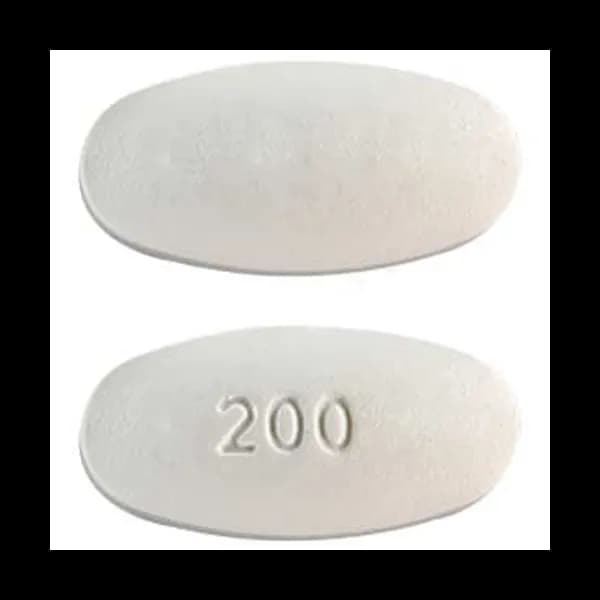
Showing the 200mg medicine. Other strengths look different — the picture changes with the strength you select.
Generic Vfend
Active ingredient: Voriconazole
$28.80
In stock (100 available)
A prescription is required
You can add this to your basket, but we cannot dispense it until you upload a valid prescription at checkout and our registered pharmacist approves it. Your card is authorized but not charged until then.
About this medicine
What it is used for
1 INDICATIONS AND USAGE VFEND is an azole antifungal indicated for the treatment of adults and pediatric patients 2 years of age and older with: • Invasive aspergillosis ( 1.1 ) • Candidemia in non-neutropenics and other deep tissue Candida infections ( 1.2 ) • Esophageal candidiasis ( 1.3 ) • Serious fungal infections caused by Scedosporium apiospermum and Fusarium species including Fusarium solani , in patients intolerant of, or refractory to, other therapy ( 1.4 ) 1.1 Invasive Aspergillosis VFEND is indicated in adults and pediatric patients (2 years of age and older) for the treatment of invasive aspergillosis (IA). In clinical trials, the majority of isolates recovered were Aspergillus fumigatus . There was a small number of cases of culture-proven disease due to species of Aspergillus other than A. fumigatus [see Clinical Studies (14.1 , 14.5) and Microbiology (12.4) ] . 1.2 Candidemia in Non-neutropenic Patients and Other Deep Tissue Candida Infections VFEND is indicated in adults and pediatric patients (2 years of age and older) for the treatment of candidemia in non-neutropenic patients and the following Candida infections: disseminated infections in skin and infections in
How it is taken
2 DOSAGE AND ADMINISTRATION • Dosage in Adults ( 2.3 ) Infection Loading Dose Maintenance Dose Intravenous infusion Intravenous infusion Oral tablets Oral suspension Invasive Aspergillosis 6 mg/kg every 12 hours for the first 24 hours 4 mg/kg every 12 hours 200 mg every 12 hours 5 mL every 12 hours Candidemia in nonneutropenics and other deep tissue Candida infections 3–4 mg/kg every 12 hours 200 mg every 12 hours 5 mL every 12 hours Scedosporiosis and Fusariosis 4 mg/kg every 12 hours 200 mg every 12 hours 5 mL every 12 hours Esophageal Candidiasis Not Evaluated Not Evaluated 200 mg every 12 hours 5 mL every 12 hours o Adult patients weighing less than 40 kg: oral maintenance dose 100 mg or 150 mg every 12 hours o Hepatic Impairment : Use half the maintenance dose in adult patients with mild to moderate hepatic impairment (Child-Pugh Class A and B) ( 2.5 ) o Renal Impairment : Avoid intravenous administration in adult patients with moderate to severe renal impairment (creatinine clearance <50 mL/min) ( 2.6 ) • Dosage in Pediatric Patients 2 years of age and older ( 2.4 ) o For pediatric patients 2 to less than 12 years of age and 12 to 14 years of age weighing less than 50 kg see
Warnings
5 WARNINGS AND PRECAUTIONS • Hepatic Toxicity : Serious hepatic reactions reported. Evaluate liver function tests at start of and during VFEND therapy ( 5.1 ) • Arrhythmias and QT Prolongation : Correct potassium, magnesium, and calcium prior to use; caution patients with proarrhythmic conditions ( 5.2 ) • Infusion Related Reactions (including anaphylaxis) : Stop the infusion ( 5.3 ) • Visual Disturbances (including optic neuritis and papilledema): Monitor visual function if treatment continues beyond 28 days ( 5.4 ) • Severe Cutaneous Adverse Reactions : Discontinue for exfoliative cutaneous reactions ( 5.5 ) • Photosensitivity : Avoid sunlight due to risk of photosensitivity ( 5.6 ) • Adrenal Dysfunction : Carefully monitor patients receiving VFEND and corticosteroids (via all routes of administration) for adrenal dysfunction both during and after VFEND treatment. Instruct patients to seek immediate medical care if they develop signs and symptoms of Cushing's syndrome or adrenal insufficiency ( 5.8 ) • Embryo-Fetal Toxicity : Voriconazole can cause fetal harm when administered to a pregnant woman. Inform pregnant patients of the potential hazard to the fetus. Advise females of re
Source: openFDA / DailyMed. Provided for information only — always follow the directions given by your own prescriber.