
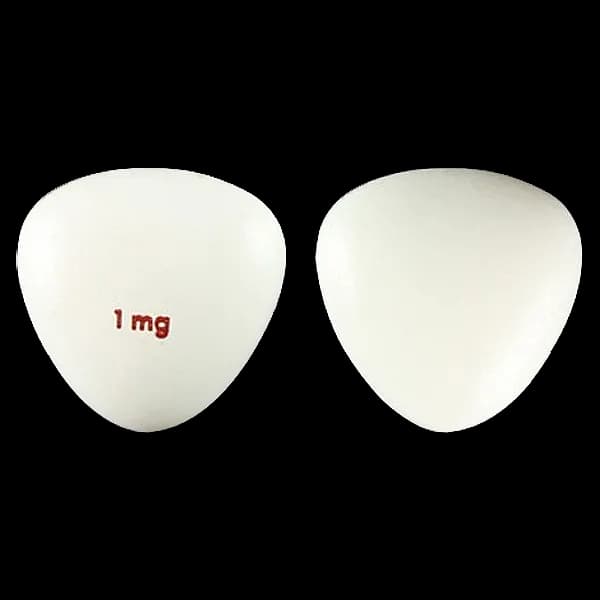
Generic Rapamune
Active ingredient: Sirolimus
$87.08
In stock (100 available)
This medicine needs close supervision
You can add this to your basket, but we cannot dispense it until you upload a valid prescription at checkout and our registered pharmacist approves it. Because this medicine requires ongoing monitoring, our pharmacist will also confirm counselling before it is released. Your card is authorized but not charged until then.
About this medicine
Boxed warning
WARNING: IMMUNOSUPPRESSION, USE IS NOT RECOMMENDED IN LIVER OR LUNG TRANSPLANT PATIENTS Increased susceptibility to infection and the possible development of lymphoma and other malignancies may result from immunosuppression Increased susceptibility to infection and the possible development of lymphoma may result from immunosuppression. Only physicians experienced in immunosuppressive therapy and management of renal transplant patients should use sirolimus for prophylaxis of organ rejection in patients receiving renal transplants. Patients receiving the drug should be managed in facilities equi
What it is used for
1 INDICATIONS AND USAGE Sirolimus is an mTOR inhibitor immunosuppressant indicated for the prophylaxis of organ rejection in patients aged ≥13 years receiving renal transplants: Patients at low- to moderate-immunologic risk: Use initially with cyclosporine (CsA) and corticosteroids. CsA withdrawal is recommended 2 months to 4 months after transplantation ( 1.1 ). Patients at high-immunologic risk: Use in combination with CsA and corticosteroids for the first 12 months following transplantation (1.1). Safety and efficacy of CsA withdrawal has not been established in high risk patients ( 1.1 , 1.2 , 14.3 ). Sirolimus is an mTOR inhibitor indicated for the treatment of patients with lymphangioleiomyomatosis ( 1.3 ). 1.1 Prophylaxis of Organ Rejection in Renal Transplantation Sirolimus tablets are indicated for the prophylaxis of organ rejection in patients aged 13 years or older receiving renal transplants. In patients at low- to moderate-immunologic risk, it is recommended that sirolimus tablets be used initially in a regimen with cyclosporine and corticosteroids; cyclosporine should be withdrawn 2 to 4 months after transplantation [ see Dosage and Administration ( 2.2 ) ]. In patien
How it is taken
2 DOSAGE AND ADMINISTRATION Sirolimus tablets are to be administered orally once daily, consistently with or without food [ see Dosage and Administration ( 2.5 ), Clinical Pharmacology ( 12.3 ) ]. Tablets should not be crushed, chewed or split. Patients unable to take the tablets should be prescribed the solution and instructed in its use. Renal Transplant Patients : Administer once daily by mouth, consistently with or without food ( 2 ). Administer the initial dose as soon as possible after transplantation and 4 hours after CsA ( 2.1 , 7.1 ). Adjust the sirolimus maintenance dose to achieve sirolimus trough concentrations within the target-range ( 2.5 ). Hepatic impairment: Reduce maintenance dose in patients with hepatic impairment ( 2.7 , 8.6 , 12.3 ). In renal transplant patients at low-to moderate-immunologic risk : Sirolimus and CsA Combination Therapy: One loading dose of 6 mg on day 1, followed by daily maintenance doses of 2 mg ( 2.2 ). Sirolimus Following CsA Withdrawal: 2 months to 4 months post-transplantation, withdraw CsA over 4 weeks to 8 weeks ( 2.2 ). In renal transplant patients at high-immunologic risk: Sirolimus and CsA Combination Therapy (for the first 12 mont
Warnings
5 WARNINGS AND PRECAUTIONS Hypersensitivity Reactions ( 5.4 ) Angioedema ( 5.5 ) Fluid Accumulation and Impairment of Wound Healing ( 5.6 ) Hyperlipidemia ( 5.7 ) Decline in Renal Function ( 5.8 ) Proteinuria ( 5.9 ) Latent Viral Infections ( 5.10 ) Interstitial Lung Disease/Non-Infectious Pneumonitis ( 5.11 ) De Novo Use Without Cyclosporine ( 5.12 ) Increased Risk of Calcineurin Inhibitor-Induced Hemolytic Uremic Syndrome/ Thrombotic Thrombocytopenic Purpura/ Thrombotic Microangiopathy ( 5.13 ) Embryo-Fetal Toxicity: Can cause fetal harm. Use of highly effective contraception is recommended for females of reproductive potential during treatment and for 12 weeks after final dose of sirolimus ( 5.15 , 8.1 ) Male Infertility: Azoospermia or oligospermia may occur ( 5.16 , 13.1 ) Immunizations: Avoid live vaccines ( 5.19 ) 5.1 Increased Susceptibility to Infection and the Possible Development of Lymphoma Increased susceptibility to infection and the possible development of lymphoma and other malignancies, particularly of the skin, may result from immunosuppression. The rates of lymphoma/lymphoproliferative disease observed in Studies 1 and 2 were 0.7 to 3.2% (for sirolimus-treated pa
Source: openFDA / DailyMed. Provided for information only — always follow the directions given by your own prescriber.