
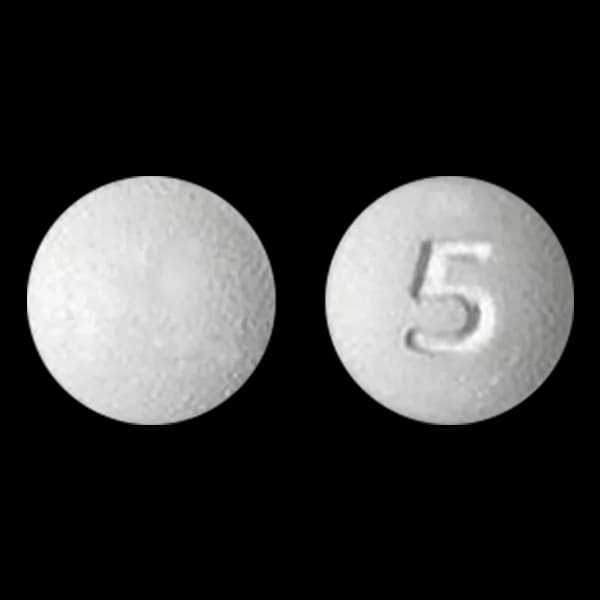
Generic Lexapro
Active ingredient: Escitalopram
$32.40
In stock (100 available)
A prescription is required
You can add this to your basket, but we cannot dispense it until you upload a valid prescription at checkout and our registered pharmacist approves it. Your card is authorized but not charged until then.
About this medicine
Boxed warning
WARNING: SUICIDAL THOUGHTS AND BEHAVIORS Antidepressants increased the risk of suicidal thoughts and behaviors in pediatric and young adult patients in short-term studies. Closely monitor all antidepressant-treated patients for clinical worsening, and for emergence of suicidal thoughts and behaviors [ see Warnings and Precautions (5.1) ]. Escitalopram is not approved for use in pediatric patients less than 7 years of age [ see Use in Specific Populations (8.4) ] . WARNING: SUICIDAL THOUGHTS AND BEHAVIORS See full prescribing information for complete boxed warning Increased risk of suicidal tho
What it is used for
1 INDICATIONS AND USAGE Escitalopram is indicated for the treatment of: major depressive disorder (MDD) in adults and pediatric patients 12 years of age and older. generalized anxiety disorder (GAD) in adults. Additional pediatric use information is approved for AbbVie Inc.’s Lexapro (escitalopram) tablets and LEXAPRO (escitalopram) oral solution. However, due to AbbVie Inc.’s marketing exclusivity rights, this drug product is not labeled with that information. Escitalopram is a selective serotonin reuptake inhibitor (SSRI) indicated for the: treatment of major depressive disorder (MDD) in adults and pediatric patients 12 years of age and older ( 1 ) treatment of generalized anxiety disorder (GAD) in adults ( 1 )
How it is taken
2 DOSAGE AND ADMINISTRATION Indication and Population Recommended Dosage MDD in Adults ( 2.1 ) Initial: 10 mg once daily Recommended: 10 mg once daily Maximum: 20 mg once daily MDD in Pediatric Patients 12 years and older ( 2.1 ) Initial: 10 mg once daily Recommended: 10 mg once daily Maximum: 20 mg once daily GAD in Adults ( 2.2 ) Initial: 10 mg once daily Recommended: 10 mg once daily Maximum: 20 mg once daily No additional benefits were seen at 20 mg once daily ( 2.1 ) Administer once daily, morning or evening, with or without food ( 2.3 ) Elderly patients: recommended dosage is 10 mg once daily ( 2.4 ) Hepatic impairment: recommended dosage is 10 mg once daily ( 2.4 , 8.6 ) When discontinuing escitalopram, reduce dose gradually whenever possible ( 2.5 ) 2.1 Major Depressive Disorder Adults The recommended dosage of escitalopram in adults is 10 mg once daily. A fixed-dose trial of escitalopram demonstrated the effectiveness of both 10 mg and 20 mg of escitalopram, but failed to demonstrate a greater benefit of 20 mg over 10 mg [ see Clinical Studies (14.1) ]. Depending on clinical response and tolerability, dosage may be increased to the maximum recommended dosage of 20 mg once
Warnings
5 WARNINGS AND PRECAUTIONS Serotonin Syndrome: Increased risk when co-administered with other serotonergic agents, but also when taken alone. If it occurs, discontinue escitalopram and serotonergic agents and initiate supportive treatment ( 4 , 5.2 ) Discontinuation syndrome: When discontinuing escitalopram, reduce dosage gradually whenever possible, and monitor for discontinuation symptoms ( 5.3 ) Seizures: Use with caution in patients with a history of seizure ( 5.4 ) Activation of Mania/Hypomania: Screen patients for bipolar disorder ( 5.5 ) Hyponatremia: Can occur in association with syndrome of inappropriate antidiuretic hormone secretion ( 5.6 ) Increased Risk of Bleeding: Concomitant use of nonsteroidal anti-inflammatory drugs, aspirin, other antiplatelet drugs, warfarin and other drugs that affect coagulation may increase risk ( 5.7 ) Interference with Cognitive and Motor Performance: Use caution when operating machinery ( 5.8 ) Angle Closure Glaucoma: Angle closure glaucoma has occurred in patients with untreated anatomically narrow angles treated with antidepressants ( 5.9 ) Use in Patients with Concomitant Illness: Use caution in patients with diseases or conditions that
Source: openFDA / DailyMed. Provided for information only — always follow the directions given by your own prescriber.