
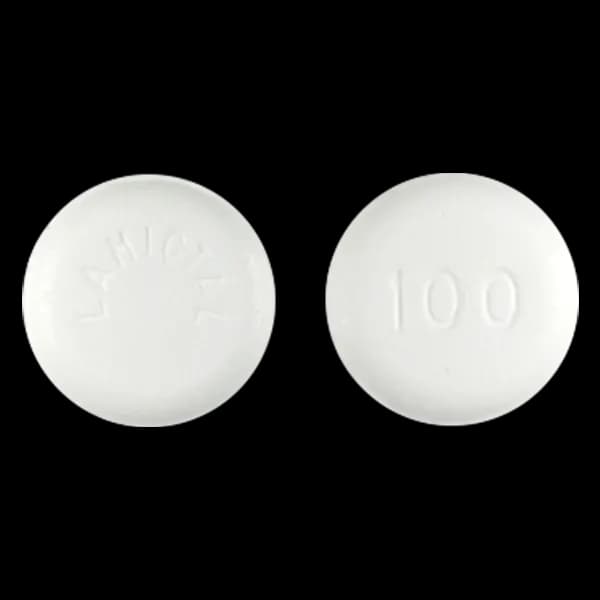
Generic Lamictal ODT
Active ingredient: Lamotrigine
$211.80
In stock (100 available)
This medicine needs close supervision
You can add this to your basket, but we cannot dispense it until you upload a valid prescription at checkout and our registered pharmacist approves it. Because this medicine requires ongoing monitoring, our pharmacist will also confirm counselling before it is released. Your card is authorized but not charged until then.
About this medicine
Boxed warning
WARNING: SERIOUS SKIN RASHES Lamotrigine can cause serious rashes requiring hospitalization and discontinuation of treatment. The incidence of these rashes, which have included Stevens-Johnson syndrome, is approximately 0.3% to 0.8% in pediatric patients (aged 2 to 17 years) and 0.08% to 0.3% in adults receiving lamotrigine. One rash-related death was reported in a prospectively followed cohort of 1,983 pediatric patients (aged 2 to 16 years) with epilepsy taking lamotrigine as adjunctive therapy. In worldwide postmarketing experience, rare cases of toxic epidermal necrolysis and/or rash-relat
What it is used for
1 INDICATIONS AND USAGE Lamotrigine orally disintegrating tablets are indicated for: Epilepsy—adjunctive therapy in patients aged 2 years and older : partial-onset seizures. primary generalized tonic-clonic (PGTC) seizures. generalized seizures of Lennox-Gastaut syndrome. ( 1.1 ) Epilepsy—monotherapy in patients aged 16 years and older : Conversion to monotherapy in patients with partial-onset seizures who are receiving treatment with carbamazepine, phenytoin, phenobarbital, primidone, or valproate as the single antiepileptic drug. ( 1.1 ) Bipolar disorder : Maintenance treatment of bipolar I disorder to delay the time to occurrence of mood episodes in patients treated for acute mood episodes with standard therapy. ( 1.2 ) Limitations of Use: Treatment of acute manic or mixed episodes is not recommended. Effectiveness of lamotrigine in the acute treatment of mood episodes has not been established. 1.1 Epilepsy Adjunctive Therapy Lamotrigine orally disintegrating tablets are indicated as adjunctive therapy for the following seizure types in patients aged 2 years and older: partial-onset seizures. primary generalized tonic-clonic (PGTC) seizures. generalized seizures of Lennox-Gastau
How it is taken
2 DOSAGE AND ADMINISTRATION Dosing is based on concomitant medications, indication, and patient age. ( 2.1 , 2.2 , 2.3 , 2.4 ) To avoid an increased risk of rash, the recommended initial dose and subsequent dose escalations should not be exceeded. Lamotrigine Orally Disintegrating Tablets Patient Titration Kits are available for the first 5 weeks of treatment. ( 2.1 , 16 ) Do not restart lamotrigine orally disintegrating tablets in patients who discontinued due to rash unless the potential benefits clearly outweigh the risks. ( 2.1 , 5.1 ) Adjustments to maintenance doses will be necessary in most patients starting or stopping estrogen-containing products, including oral contraceptives. ( 2.1 , 5.9 ) Discontinuation: Taper over a period of at least 2 weeks (approximately 50% dose reduction per week). ( 2.1 , 5.10 ) Epilepsy: Adjunctive therapy—See Table 1 for patients older than 12 years and Tables 2 and 3 for patients aged 2 to 12 years. ( 2.2 ) Conversion to monotherapy—See Table 4. ( 2.3 ) Bipolar disorde r: See Tables 5 and 6. ( 2.4 ) 2.1 General Dosing Considerations Rash There are suggestions that the risk of severe, potentially life-threatening rash may be increased by (1) c
Warnings
5 WARNINGS AND PRECAUTIONS Life-threatening serious rash and/or rash-related death: Discontinue at the first sign of rash, unless the rash is clearly not drug related. ( Boxed Warning , 5.1 ) Hemophagocytic lymphohistiocytosis: Consider this diagnosis and evaluate patients immediately if they develop signs or symptoms of systemic inflammation. Discontinue lamotrigine if an alternative etiology is not established. ( 5.2 ) Fatal or life-threatening hypersensitivity reaction: Multiorgan hypersensitivity reactions, also known as drug reaction with eosinophilia and systemic symptoms, may be fatal or life threatening. Early signs may include rash, fever, and lymphadenopathy. These reactions may be associated with other organ involvement, such as hepatitis, hepatic failure, blood dyscrasias, or acute multiorgan failure. Lamotrigine should be discontinued if alternate etiology for this reaction is not found. ( 5.3 ) Cardiac rhythm and conduction abnormalities: Based on in vitro findings, lamotrigine could cause serious arrhythmias and/or death in patients with certain underlying cardiac disorders or arrhythmias. Any expected or observed benefit of lamotrigine in an individual patient with
Source: openFDA / DailyMed. Provided for information only — always follow the directions given by your own prescriber.