
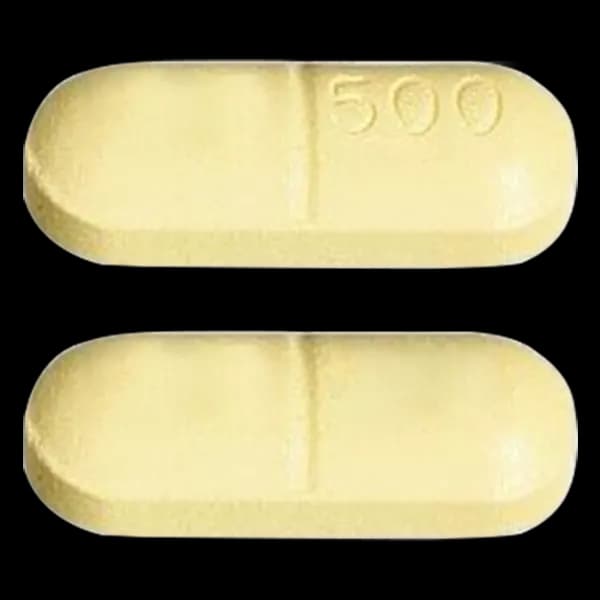
Generic Benemid
Active ingredient: Probenecid
$24.90
In stock (100 available)
A prescription is required
You can add this to your basket, but we cannot dispense it until you upload a valid prescription at checkout and our registered pharmacist approves it. Your card is authorized but not charged until then.
About this medicine
What it is used for
1 INDICATIONS AND USAGE ORLYNVAH, a combination of sulopenem etzadroxil, a penem antibacterial, and probenecid, a renal tubular transport inhibitor, is indicated for the treatment of uncomplicated urinary tract infections (uUTI) caused by the designated microorganisms Escherichia coli, Klebsiella pneumoniae, or Proteus mirabilis in adult women who have limited or no alternative oral antibacterial treatment options. ( 1.1 ) Limitations of Use ORLYNVAH is not indicated for the treatment of: Complicated urinary tract infections (cUTI) or as step-down treatment after intravenous antibacterial treatment of cUTI. ( 1.1 , 14.2 ) Complicated intra-abdominal infections (cIAI) or as step-down treatment after intravenous antibacterial treatment of cIAI. ( 1.1 , 14.3 ) Usage to Reduce Development of Drug-Resistant Bacteria To reduce the development of drug-resistant bacteria and maintain the effectiveness of ORLYNVAH and other antibacterial drugs, ORLYNVAH should be used only to treat uUTI that are proven or strongly suspected to be caused by susceptible bacteria. Culture and susceptibility information should be utilized in selecting or modifying antibacterial therapy. ( 1.2 , 5.5 ) 1.1 Uncomp
How it is taken
2 DOSAGE AND ADMINISTRATION The recommended dosage of ORLYNVAH is one tablet orally twice daily for 5 days. ( 2.1 ) Administration of ORLYNVAH with food is recommended. ( 2.1 ) 2.1 Recommended Dosage The recommended dosage of ORLYNVAH is one tablet (sulopenem etzadroxil 500 mg and probenecid 500 mg) orally twice daily for 5 days. Administration of ORLYNVAH with food is recommended [see Clinical Pharmacology ( 12.3 )]. 2.2 Recommended Dosage in Patients with Renal Impairment Administration of ORLYNVAH is not recommended in patients with creatinine clearance (CrCL) less than 15 mL/min or patients on hemodialysis. No dosage adjustment is required for ORLYNVAH in patients with CrCL greater than or equal to15 mL/min [see Use in Specific Populations ( 8.6 ) and Clinical Pharmacology ( 12.3 )]. 2.3 Recommendations Regarding Missed Dose(s) If a dose of ORLYNVAH is missed, instruct patients to take the dose as soon as possible. Do not double the dose to make up for the missed dose.
Warnings
5 WARNINGS AND PRECAUTIONS Hypersensitivity Reactions : Hypersensitivity reactions have been reported in patients treated with ORLYNVAH. Serious and occasionally fatal hypersensitivity reactions, including anaphylaxis, have been reported with beta-lactam antibacterial drugs. Severe allergic reactions and anaphylaxis have been reported with the use of probenecid (a component of ORLYNVAH). If an allergic reaction to ORLYNVAH occurs, discontinue the drug and institute appropriate therapy. ( 5.1 ) Clostridioides difficile -Associated Diarrhea (CDAD) : This has been reported with nearly all systemic antibacterial agents. Evaluate if diarrhea occurs. ( 5.2 ) Exacerbation of Gout : When prescribing ORLYNVAH to patients with a known history of gout, ensure appropriate therapy of gout is instituted. ( 5.4 ) Uric Acid Nephropathy in Patients at Risk for Tumor Lysis Syndrome : When prescribing ORLYNVAH to patients with risk factors for tumor lysis syndrome, take appropriate measures to reduce the risk. ( 5.5 ) 5.1 Hypersensitivity Reactions Hypersensitivity reactions, specifically cases of angioedema, have been reported in patients treated with ORLYNVAH [see Adverse Reactions ( 6.1 )]. Seriou
Source: openFDA / DailyMed. Provided for information only — always follow the directions given by your own prescriber.