
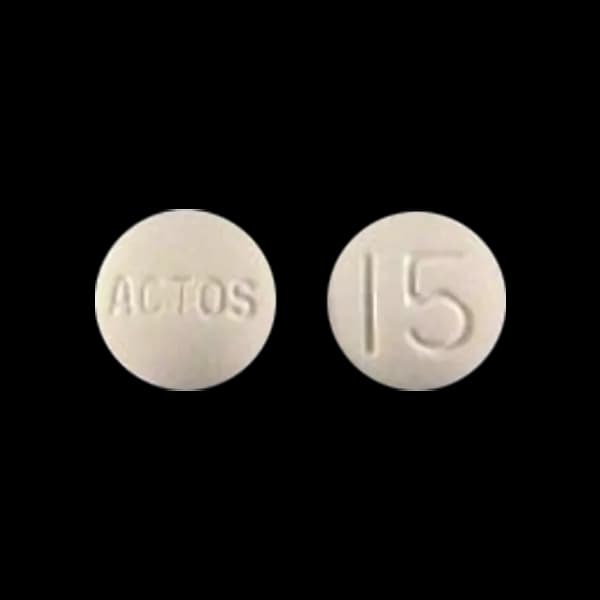
Showing the 15mg medicine. Other strengths look different — the picture changes with the strength you select.
Generic Actos
Active ingredient: Pioglitazone Hydrochloride
$21.60
In stock (100 available)
A prescription is required
You can add this to your basket, but we cannot dispense it until you upload a valid prescription at checkout and our registered pharmacist approves it. Your card is authorized but not charged until then.
About this medicine
Boxed warning
WARNING: CONGESTIVE HEART FAILURE Thiazolidinediones, including pioglitazone , cause or exacerbate congestive heart failure in some patients [see Warnings and Precautions (5.1) ] . After initiation of pioglitazone , and after dose increases, monitor patients carefully for signs and symptoms of heart failure (e.g., excessive, rapid weight gain, dyspnea, and/or edema). If heart failure develops, it should be managed according to current standards of care and discontinuation or dose reduction of pioglitazone must be considered. Pioglitazone is not recommended in patients with symptomatic heart fa
What it is used for
1 INDICATIONS AND USAGE Monotherapy and Combination Therapy Pioglitazone tablets are indicated as an adjunct to diet and exercise to improve glycemic control in adults with type 2 diabetes mellitus in multiple clinical settings [see Clinical Studies (14) ] . Important Limitations of Use Pioglitazone tablets exert its antihyperglycemic effect only in the presence of endogenous insulin. Pioglitazone tablets should not be used to treat type 1 diabetes or diabetic ketoacidosis, as it would not be effective in these settings. Use caution in patients with liver disease [see Warnings and Precautions (5.3) ] . Pioglitazone is a thiazolidinedione and an agonist for peroxisome proliferator-activated receptor (PPAR) gamma indicated as an adjunct to diet and exercise to improve glycemic control in adults with type 2 diabetes mellitus in multiple clinical settings. ( 1, 14) Important Limitations of Use: Not for treatment of type 1 diabetes or diabetic ketoacidosis. ( 1 )
How it is taken
2 DOSAGE AND ADMINISTRATION Initiate pioglitazone tablets at 15 mg or 30 mg once daily. Limit initial dose to 15 mg once daily in patients with NYHA Class I or II heart failure. (2.1) If there is inadequate glycemic control, the dose can be increased in 15 mg increments up to a maximum of 45 mg once daily. (2.1) Obtain liver tests before starting pioglitazone tablets. If abnormal, use caution when treating with pioglitazone tablets, investigate the probable cause, treat (if possible) and follow appropriately. Monitoring liver tests while on pioglitazone tablets are not recommended in patients without liver disease. ( 5.3 ) 2.1 Recommendations for All Patients Pioglitazone tablets should be taken once daily and can be taken without regard to meals. The recommended starting dose for patients without congestive heart failure is 15 mg or 30 mg once daily. The recommended starting dose for patients with congestive heart failure (NYHA Class I or II) is 15 mg once daily. The dose can be titrated in increments of 15 mg up to a maximum of 45 mg once daily based on glycemic response as determined by HbA1c. After initiation of pioglitazone tablets or with dose increase, monitor patients caref
Warnings
5 WARNINGS AND PRECAUTIONS Congestive heart failure: Fluid retention may occur and can exacerbate or lead to congestive heart failure. Combination use with insulin and use in congestive heart failure NYHA Class I and II may increase risk. Monitor patients for signs and symptoms. (5.1) Hypoglycemia: When used with insulin or an insulin secretagogue, a lower dose of the insulin or insulin secretagogue may be needed to reduce the risk of hypoglycemia. (5.2) Hepatic effects: Postmarketing reports of hepatic failure, sometimes fatal. Causality cannot be excluded. If liver injury is detected, promptly interrupt pioglitazone and assess patient for probable cause, then treat cause if possible, to resolution or stabilization. Do not restart pioglitazone if liver injury is confirmed and no alternate etiology can be found. (5.3) Bladder cancer: May increase the risk of bladder cancer. Do not use in patients with active bladder cancer. Use caution when using in patients with a prior history of bladder cancer. (5.4) Edema: Dose-related edema may occur. (5.5) Fractures: Increased incidence in female patients. Apply current standards of care for assessing and maintaining bone health. (5.6) Macula
Source: openFDA / DailyMed. Provided for information only — always follow the directions given by your own prescriber.